Forest Row
East Sussex

A guide for
guests

Fern Studio

Tall conifers seen from below, with sunlit leafy branches at the edges and pale sky behind.

A self-contained studio down a quiet lane on the edge of Forest Row / fifteen minutes’ walk to the village / the forest, the farms and the water beyond ( everything we’d tell a friend who came to stay ).

01 The village

About fifteen minutes on foot

Forest Row

Fifteen minutes down the footpaths and you’re in the village, with its cafés, coffee shops, independent shops and everyday essentials. For the big supermarkets, East Grinstead is a short drive away.

Stocking up to cook? Shearer’s Fine Foods, the village deli in the old post office on The Square, is the place for cheese, charcuterie and fine foods from small producers (closed Sundays). Seasons Whole Foods, close by on Lower Road, is the local grocer. For the everyday basics, the Co-op on Hartfield Road and the Tesco Express at the petrol station on Lewes Road have you covered.

Thirsty? Flying Trunk Brewery, a tiny award-winning brewery on Tomtits Lane about a kilometre south of the village, has a tasting room and bottle shop. It opens only a few days a week, so check first.

The parish council runs a village market of local food and drink and looks after two greens on Hartfield Road, Forester’s Green and Rush Green. Fancy exploring on two wheels? The council’s bike hire unlocks with a phone app, and a surfaced path, Foresters Link, runs from the middle of the village onto the Forest Way.

02 The map

Walks nearby, and the places in this guide

Walks and where things are

Every place in this guide is on the map; zoom out for the days out further afield. Pick a walk from the list below and its route appears, with a link to the full details. Round walks bring you back where you started; the long-distance paths are drawn only for the stretch near Forest Row.

Opened this guide from the link in your arrival message? Then the studio is marked too, along with the walks that start from the door. Otherwise it stays off the map, because anyone can find this page.

A map of the walks and the places in this guide, on OpenStreetMap.

Choose a walk below and its route appears on the map.

Round walks

Long-distance paths through the area

Walk routes from OpenStreetMap contributors (opens in a new tab), except our own sketches: the Brambletye loop, and the walks from the door. Dashed lines are approximate. Follow the signs on the ground, and take a map on longer walks.

03 Coffee

Our two favourites in the village

Where to get coffee

  • The Bazaar, on Hillside in the middle of the village: our pick for coffee, with food to go with it, in a hub of small independent stalls selling vintage clothes, gifts, plants and art.
  • Seasons Forest Kitchen, on Hartfield Road: a neighbourhood coffee shop that does food as well. It isn’t open every day, so check before you go.

04 Places to eat

In the village, and a short drive away

Where to eat

  • Maria’s Café, at Blenheim Studios on Lewes Road: breakfast and lunch, and known for its cooked breakfasts. It isn’t open every day, so book a table by text.
  • Seasons Forest Kitchen, on Hartfield Road: food as well as coffee.
  • The Bazaar, on Hillside: food and good coffee among the stalls.
  • Java & Jazz, on Lewes Road: pizzeria and café, serving from breakfast through to dinner, with a vegan menu. Book a table online.
  • Thai Time, on Lewes Road: Thai cooking with fresh, local produce.
  • Roochi, on Hartfield Road: the good Indian, and award-winning with it. Book a table or order a takeaway online.
  • The Chequers Inn, in the middle of the village: an old inn dating back to 1452, with heavy oak beams, a log fire in the inglenook and a dining room.
  • The Swan, on Lewes Road in the middle of the village: a country pub with a restaurant, a garden and rooms, and a kitchen that sources locally.
  • The Hatch Inn, Colemans Hatch: one of two really good pubs out this way, on the edge of Ashdown Forest near Pooh Sticks Bridge, in a building said to date from 1430. Very dog friendly. Food times vary through the week, so check first.
  • The Gallipot Inn, Upper Hartfield: the other really good one, a family-run 16th-century pub on the edge of the forest, with a garden. Dog friendly, and worth booking for Sunday lunch.
  • The Cat Inn, West Hoathly, a short drive the other way: pub, restaurant and rooms, with seasonal food and real ales. Book a table on its website.
  • The Real Pizza Company, on Heathcote Drive in East Grinstead: really good stone-baked pizza, for collection or delivery. Order online.
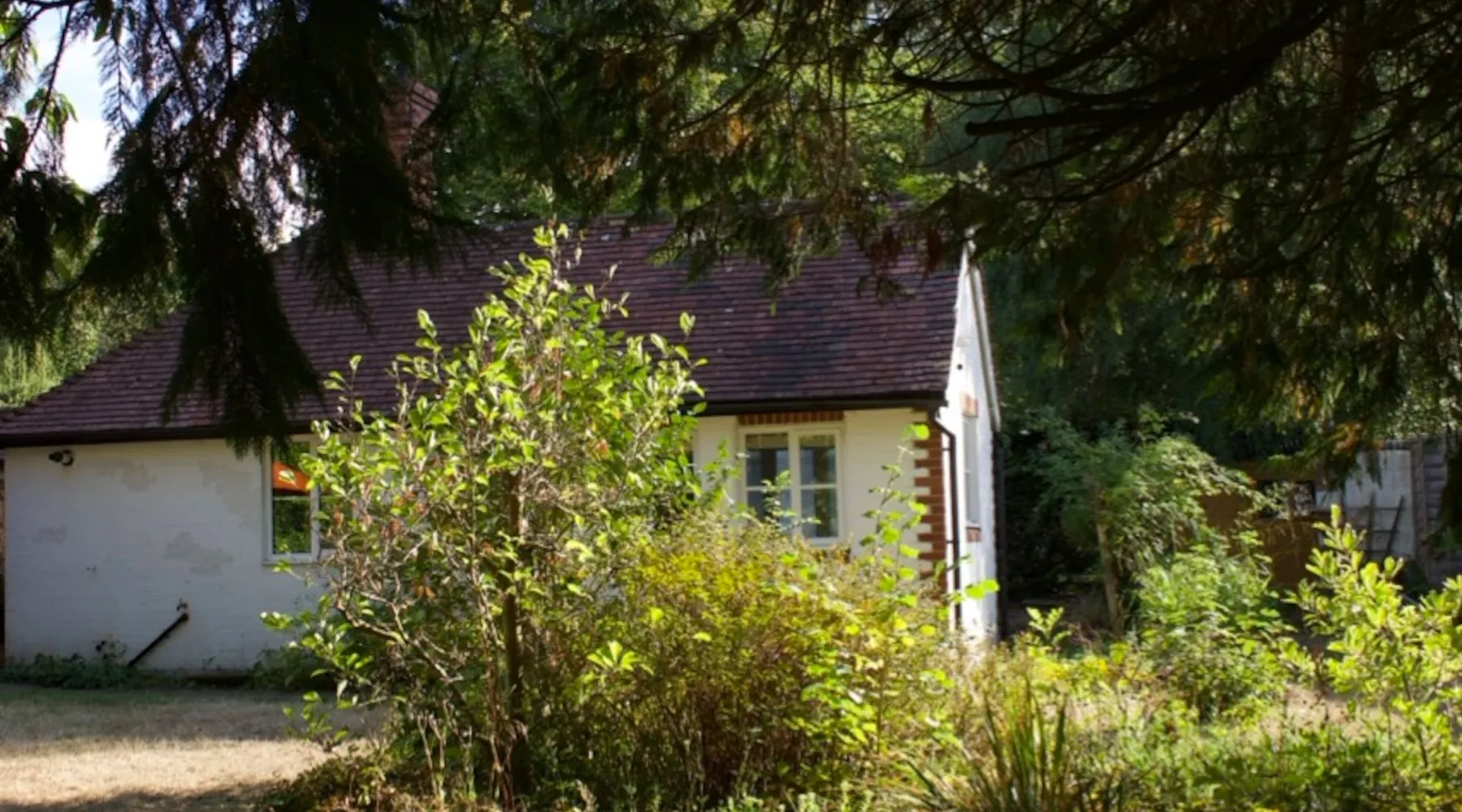
The studio’s white wall and tiled roof seen through conifer branches and shrubs on a sunny afternoon.
The studio from the lane, under the trees

05 The forest

Heath and woodland beyond the village

Ashdown Forest

Open heathland and deciduous woodland roll out across Ashdown Forest, one of the largest areas of open access land in South East England. The Ashdown Forest Trust owns it and the Conservators of Ashdown Forest look after it. Start at the Ashdown Forest Centre at Wych Cross. There are more than forty car parks across the forest, but no parking at all between midnight and six in the morning.

This is Pooh country. A. A. Milne lived on the forest’s edge, and his walks here with his son Christopher Robin became the Winnie-the-Pooh stories. Pooh Sticks Bridge, Galleon’s Lap, Roo’s Sandy Pit and the Enchanted Place are all real, and all there to find. The Conservators ask visitors to follow the Forest Code, which is on their website.

Fancy seeing it on horseback? Riding here is by permit only, but the Conservators license three riding centres to take visitors out: Ashdown Forest Riding Centre, which takes complete beginners; East View Riding Centre near Chelwood Gate, for riders aged 8 and over; and Ashdown Riding near Nutley. All three are on the map; book with them direct.

After heavy rain, go looking for the forest’s two small waterfalls, the Garden of Eden and Mungo’s Waterfall, a walk from Ellison’s Pond car park on the Crowborough road. In a dry summer they can dry up altogether. There are no waymarks, so take a map.
06 Walks

Bridleways, woodland paths and the old railway line

Walks from the door

Step out of the door and you’re straight onto the walking map: the lane leads to bridleways and woodland paths, and the reservoir and its footpaths are close by. This is the High Weald National Landscape, a medieval patchwork of wooded hills, sandstone outcrops, small fields and sunken lanes, laced with thousands of kilometres of public rights of way.

The Forest Way follows the old railway line from East Grinstead to Groombridge, via Forest Row, Hartfield and Withyham: flat, surfaced and shared by walkers, cyclists and riders as part of National Cycle Network Route 21. The High Weald website has a self-guided circular walk from Forest Row along part of it. Take an Ordnance Survey map, as it advises, because paths can be muddy and overgrown.

The Brambletye Ruins loop

  • About 5 km, circular
  • Allow 1.5 to 2 hours
  • Woodland paths, tracks and the Forest Way

Our own loop: woodland, quiet countryside and a ruined mansion, with the Forest Way to bring you home. You can join it from the studio’s lane. On the map it’s drawn from the village, to keep the studio off it, and the line is approximate, so follow the signed footpaths.

The highlight is Brambletye House, known locally as Brambletye Castle: the ruin of a Jacobean mansion built by Sir Henry Compton in 1631 to replace an older moated manor nearby. The family had gone before the century was out and the house fell into ruin, but three tall stone towers still stand. The ruins are on private land, so admire them from the footpath.

The route skirts Tablehurst Farm, so stop at the farm shop for the farm’s own meat, vegetables and raw milk, bread baked on the farm, local cheese and juice, and pies and pastries from its kitchen, then at the little café for coffee, cake or something savoury. The café and butchery aren’t open every day, so check the farm’s website before you set off. From the farm, the Forest Way carries you back along the old railway line towards the studio.

Sensible shoes, especially after rain.

The Goat walk

  • About 7 km, circular, or shorter
  • Allow 2 to 2.5 hours
  • Open heath and woodland tracks, hilly and muddy in places

Drive up to Goat car park on Priory Road (search for “Goat Car Park, Forest Row” in a maps app and it takes you straight there) and you’re out onto open heath and woodland, with views across the High Weald. Routes head off in every direction. A 7 km circuit takes two to two and a half hours; shorter loops are easy to find.

On the way back, detour to Plaw Hatch Farm: barista coffee and cake at the Coffee Barn, and in the shop the farm’s own meat, vegetables, raw milk and cheese, with bread and pastries from local bakers, to take back to the studio. The Coffee Barn isn’t open every day, so check the farm’s website first.

Every forest car park charges. In September 2026 it was £2 for up to an hour, £2.50 for two, £4 for four and £5 for the day, paid by app or phone (no cash at Goat), and one ticket covers any forest car park that day. Check the Conservators’ parking page for current rates. No parking on the forest between midnight and six in the morning.

07 The farms

Two community-owned biodynamic farms

Tablehurst and Plaw Hatch

Tablehurst Farm, a community farm since 1996, sits on the London Road just north of the village, and you can walk there on the footpath across the River Medway. The shop sells the farm’s own meat, fruit and vegetables alongside organic goods from mostly local suppliers, and there’s a small café with a garden at the heart of the farm.

Plaw Hatch Farm, a short drive away on the edge of Ashdown Forest near Sharpthorne, has been farmed biodynamically for forty years. The star of the shop is raw milk from its own herd, from a dairy just metres from the cows, alongside cheese, yoghurt, cream, meat, eggs and vegetables. Visitors are welcome to wander round; the map of the farm walk is kept in the shop.

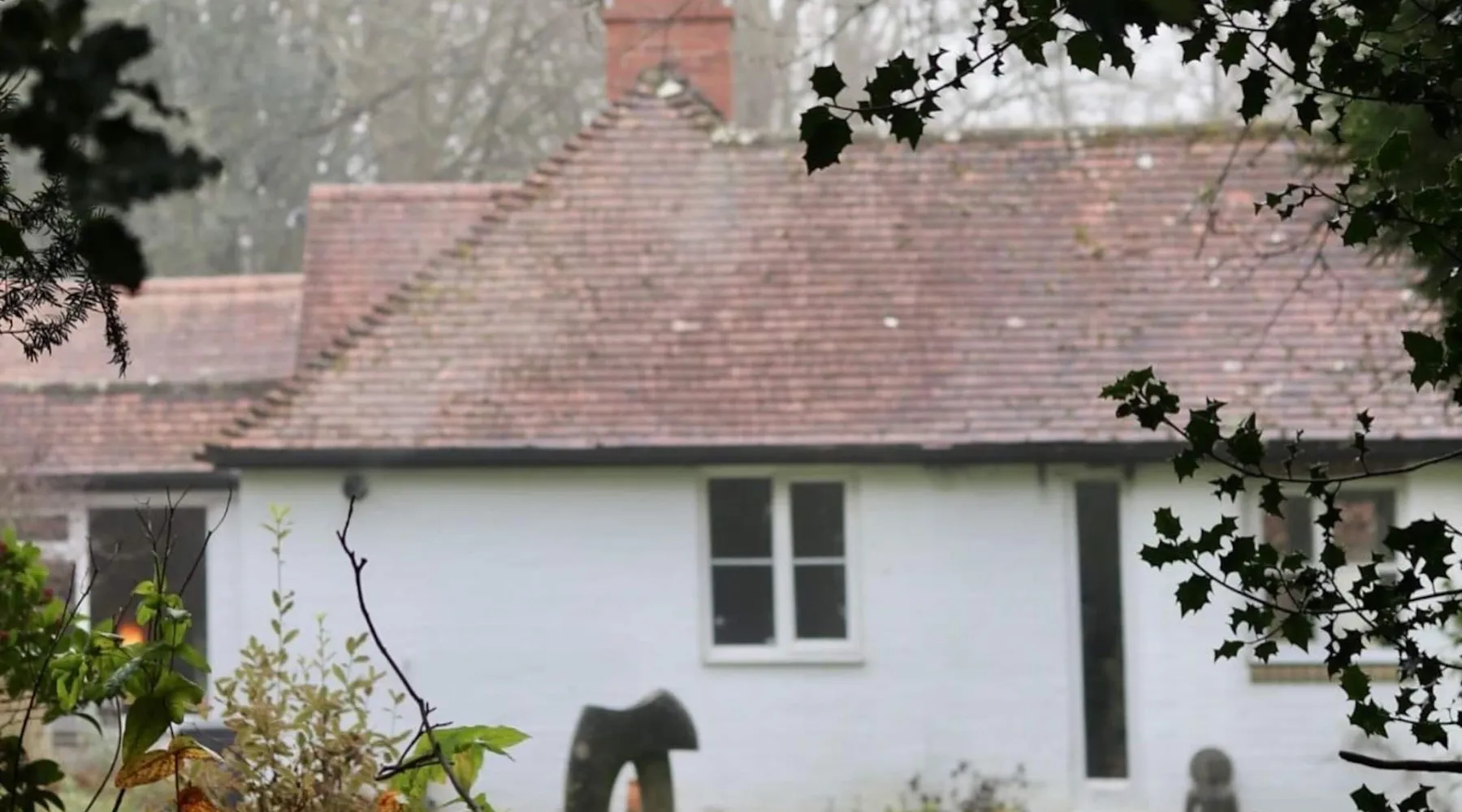
The white studio with its tiled roof and brick chimney seen across the lawn through holly branches on a misty morning.
A winter morning in the front garden

08 The water

Swimming, sailing and paddleboarding, booked ahead

Weir Wood Reservoir

Close by, Weir Wood Reservoir is a Site of Special Scientific Interest in the High Weald, managed by Southern Water with conservation partners. Fancy a wild swim? Weir Wood Sport and Leisure runs supervised open-water sessions in a marked bay, with lifeguards and safety craft on hand. Parking is free.

Sessions are for confident swimmers, aren’t coached, and must be booked ahead on the operator’s website, which lists the dates. A bright swim cap and a tow float are compulsory. Swimming at any other time isn’t allowed, and isn’t safe.

Rather be on the water than in it? The same team runs sailing courses for adults and young people and paddlesport sessions, and hires out paddleboards, kayaks, canoes, dinghies and pedalos. You don’t need to be a member, but everything must be booked ahead, and boats only go out while the office is staffed.

Afterwards, the licensed Clubhouse Café at the eastern end serves light meals, cakes, ice cream and drinks with a view across the water. It isn’t open every day, so check before you go.

09 Days out

Castles, gardens, farm shops and cafés, a drive away

Further afield

  • Hever Castle, near Edenbridge: Anne Boleyn’s childhood home, a double-moated castle with award-winning gardens in 125 acres of grounds. Open daily from February to November, with a shorter week in November and a separate Christmas season. No need to book, but tickets are cheaper online.
  • Chiddingstone, just east of Hever. Chiddingstone Castle is a historic house and museum with a tea room and a lake; the house opens Thursday to Sunday from March to early November, and the grounds are free every day. Along the village street, kept by the National Trust, Chiddingstone Stores trades from a building of 1453, with a café next door.
  • Penshurst Place: a medieval manor house with a great hall of 1341, home to the Sidney family since 1552, set in gardens. The house and gardens open daily until 1 November, while the café, gift shop and plant centre stay open all year. Tickets on arrival only.
  • Falconhurst, Markbeech, near Edenbridge: a family estate with a farm shop of local, seasonal produce, coffee and home baking, and gardens open from late March to mid-November. The shop closes on Tuesdays; the gardens on Tuesdays and Sundays.
  • Kingdom, near Penshurst: a café in 13 acres of woodland, open every day.
  • Dragonfly Farm Shop and Café, near Speldhurst outside Tunbridge Wells: breakfast, lunch and local produce. Closed Mondays; cards only.
  • The Deer Park Café, on the Eridge estate near Crowborough: breakfast, lunch, coffee and wine, with deer and woodland in view. Open every day, and no bookings, so just drop in.
  • Babylon, Duddleswell, in the middle of the forest: a plant nursery with a restaurant, The Kitchen, and a shop of homeware and garden things. Open every day; book a table online.
  • Tyler’s Ground, further south between Blackboys and Waldron: a farm café serving seasonal plates of produce grown on the farm, and good coffee. Thursday to Saturday only.
  • Sheffield Park and Garden: a National Trust landscape garden of lakes and bridges. Arrive in style on the Bluebell Railway’s steam trains from East Grinstead to Sheffield Park station, then walk ten to fifteen minutes over rough ground to the garden. Next door, Trading Boundaries has antique Indian furniture and gifts, a café bar and live music; check its hours before you go.
  • Climbing: Harrison’s Rocks, in woodland about a mile south of Groombridge, is a line of sandstone crags owned by the BMC’s Land and Property Trust and looked after by local climbers, with a pay and display car park. Follow the Southern Sandstone Code, as the soft rock is easily damaged. Closer to home, Stone Farm Rocks near Weir Wood is a smaller crag, and Volume 1 in East Grinstead does indoor bouldering, beginners included.
  • parkrun: a free, timed 5 km run or walk every Saturday at 9am, at Wakehurst near Ardingly and at Kingdom near Penshurst. Register on the parkrun website before your first one and bring your barcode, or you won’t get a time.

10 The studio

While you are here

Need to know

  • We live in the house behind the studio with our baby and two cats. The cats don’t come in, and the cat flap on the studio door stays locked while you’re here. Now and then you may hear ordinary family life from our side.
  • The front garden and the table under the trees are yours. The rear garden is our family’s, and the bedroom’s French doors open onto our courtyard, so please keep them closed; they still let in the light.
  • The kitchen has an oven and hob, a small fridge, a kettle, a toaster and a Nespresso machine, plus pans, crockery, olive oil, salt, pepper and spices. Recycling is provided.
  • You’ll find a smoke alarm, a carbon monoxide alarm, a fire extinguisher and a first aid kit in the studio. In an emergency, call 999.
  • There are security cameras outside, covering the front courtyard, the entrance and the side driveway. There are none inside.
  • Anything private, like the Wi-Fi details and how to reach us, is in your arrival message. If anything isn’t right, tell us: we’re next door.

11 Leaving

Checkout before 11:00

When you go

Checkout is before 11:00; your arrival message covers the key and the lockbox. If you enjoyed your stay, a few honest words on Airbnb help a small place like this more than you might think. Thanks for staying with us.